
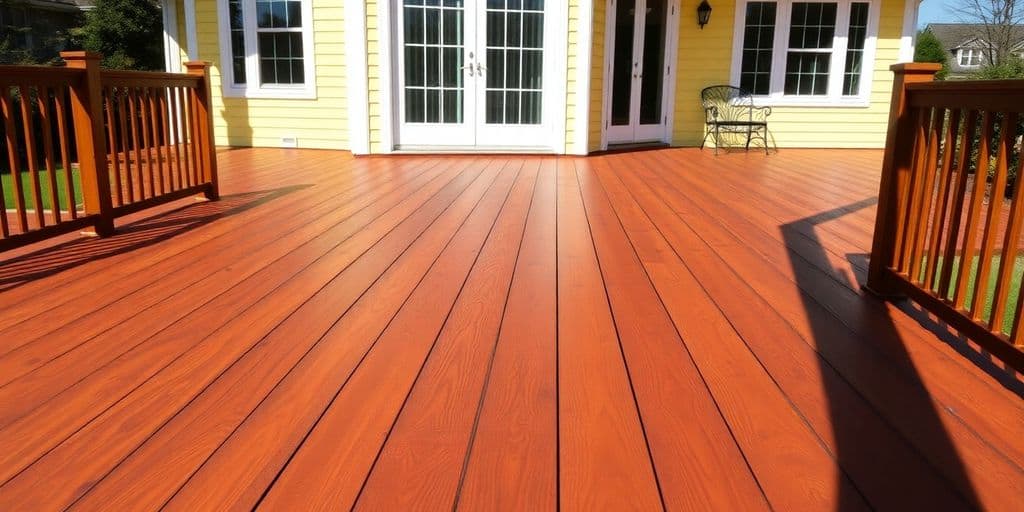
When homeowners compare deck staining vs painting, they are usually trying to answer one practical question: which option will hold up better and look better over time? In Alaska, that question matters even more because decks are exposed to moisture, freeze-thaw cycles, cool temperatures, changing sunlight, and shorter maintenance windows. A finish that looks fine at first may not hold up if it cannot withstand wet conditions and repeated weather exposure.
The short answer is that stain is often the better fit for many Alaska wood decks, especially if you want easier upkeep and a finish that works with the wood rather than sitting heavily on top of it. Paint can still be the right option in some cases, especially when appearance matters most or when you want a solid, uniform color. But paint usually carries more risk on horizontal deck surfaces because once it starts failing, it often peels and chips, requiring more labor to fix.
This guide breaks down the real differences between deck staining and painting, how each one performs in Alaska conditions, and which option is usually the smarter choice for long-term results.
Why Alaska Changes the Deck Finishing Decision
Not every climate treats exterior wood the same way.
In Alaska, decks often face a mix of damp air, rain, snow, cool mornings, shorter dry periods, and seasonal temperature shifts. Even though conditions vary by region, the broader issue is exposure. A deck may stay wet longer after rainfall, retain moisture in shaded areas, or undergo repeated freezing and thawing throughout the year.
That matters because decks are horizontal surfaces. They take direct weather exposure, unlike siding and trim. Water can sit on the boards, work into cracks, and stress the coating from above and below. In a place with frequent moisture and seasonal swings, the wrong finish can fail faster than expected.
This is why deck staining vs painting is not just a style choice for Alaska homes. It is a performance choice.
What Deck Stain Does
Deck stain is designed to protect wood while still allowing the material to behave more naturally.
Depending on the product, stain can soak into the wood or form a lighter surface layer than paint. Some stains are more transparent and show more grain. Others are semi-transparent, semi-solid, or solid, giving more color and coverage.
For homeowners, the biggest advantages of stain are often:
- Better wood appearance
- Easier maintenance
- Less dramatic failure
- Better fit for outdoor wood movement
- Simpler recoating in many cases
When the stain wears out, it usually fades, thins, or looks weathered rather than peeling in thick sheets. That difference matters a lot in Alaska.
What Deck Paint Does
Paint creates a thicker film on the surface.
That film can give you a smooth, uniform color and hide wood variation better than many stains. If your deck boards are mismatched, heavily weathered, or visually uneven, paint can give a cleaner visual reset.
The downside is that paint sits on top more than many deck stains do. On a horizontal surface exposed to standing moisture, snow, abrasion, and expansion-contraction cycles, this can become a weakness. If moisture gets under the paint film or the surface prep is not strong enough, the paint can begin to peel, chip, blister, or crack.
That does not mean paint always fails. It means paint usually requires greater precision and more maintenance when used on a deck surface.
Deck Staining vs Painting: The Main Difference
If you want the simplest way to think about it, here it is:
Stain tends to wear away gradually.
Paint tends to fail more visibly.
That one difference affects nearly everything else.
With stain, the usual maintenance cycle is cleaning, light prep, and recoating once the finish starts to dull or fade.
With paint, once peeling starts, the work is often much heavier. You may need scraping, sanding, patching, spot priming, and more time before you can recoat properly.
For Alaska homeowners, that difference in upkeep often makes stain the more practical choice.
Which One Handles Moisture Better?
For many wood decks, stain is usually the better moisture-friendly option.
That is because stain is generally better suited to the way exterior wood responds to seasonal movement and surface wear.
Paint can resist water well when it is intact, but problems begin when the bond weakens. Once paint starts separating from the wood, water can seep beneath the surface film, worsening the failure.
In Alaska, where decks may stay wet longer, and weather windows are less forgiving, the risk of paint on the walking surface is higher.
Which One Lasts Longer?
This depends on what you mean by “lasts.”
If you mean which finish can go longer without needing touch-up, a high-quality coating of either type may perform well when applied properly.
If you mean which option tends to be easier to live with over time, stain often wins because it ages more gracefully.
A painted deck may look solid for a while, but when it starts to break down, the repair process can be more involved. A stained deck may need more frequent refreshing, but the upkeep is often simpler and less disruptive.
So for many Alaska homes, stain does not always “last longer” in the strictest sense of time between coats, but it often performs better as a maintenance system.
Which One Looks Better?
This depends on the look you want.
Choose a stain if you want:
- More natural wood character
- Visible grain
- A finish that feels more organic outdoors
- A surface that looks less heavy
Choose paint if you want:
- Stronger color coverage
- A more uniform look
- More hiding of surface variation
- A cleaner, more finished visual effect
This is where homeowner preference matters most. Some people want the deck to look like wood. Others want the deck to look polished and color-matched to the home.
Still, in Alaska, performance should stay ahead of appearance. A great-looking finish that starts peeling early quickly becomes the worst choice.
Solid Stain vs Paint
This is where many homeowners get stuck.
A solid stain can look somewhat similar to paint because it provides strong color coverage. But it is still generally treated more like a stain system than a paint system.
That makes solid stain a strong middle-ground option for Alaska decks.
It can work well when:
- The wood is older
- You want more color coverage
- You do not want the upkeep risk of deck paint
- The deck has a visual inconsistency
- You still want a coating intended for deck use
For many Alaska homeowners, solid stain is the most balanced answer in the deck staining vs painting debate.
When Stain Is Usually the Better Choice
Stain is usually the better fit when your deck is made of real wood, and you want practical upkeep.
It is especially appealing when:
- The deck gets frequent weather exposure
- Moisture is a regular issue
- You want easier recoating later
- You prefer a more natural finish
- You want less risk of peeling
That last point matters a lot. Decks take foot traffic, furniture movement, snow management, and surface wear into account. A finish that can weather more gracefully is often the smarter long-term choice.
When Paint Might Make Sense
Paint may still make sense in certain cases.
It can be considered when:
- Appearance is the top priority
- You want a solid decorative look
- The deck surface is already painted, and you are continuing that system
- The deck is not the main walking surface, such as some porch-style areas
- The wood condition and prep allow for a proper bond
Even then, many homeowners choose coatings specifically intended for decks rather than standard exterior wall paint.
If you go the paint route, prep quality becomes even more important.
Prep Work Matters Either Way
No finish will perform well on a dirty or poorly prepared deck.
That matters for both stain and paint.
Before finishing a deck, make sure the surface is:
- Clean
- Dry
- Free of loose coating
- Free of debris between boards
- Smooth where needed
- Ready for the product you plan to use
In Alaska, moisture timing is one of the biggest parts of prep. A deck can look ready and still hold too much moisture for a coating to perform well.
Weather Windows Matter in Alaska
Application timing can make or break the result.
For Alaska decks, that means:
- Do not rush after rain
- Avoid cool, damp mornings
- Watch overnight lows
- Make sure the boards are truly dry
- Follow the product label exactly
This is true for both stain and paint, but paint is often less forgiving if conditions are marginal.
Maintenance Comparison
Here is the practical difference many homeowners care about most.
With stain, maintenance usually looks like:
- Wash the deck
- Let it dry
- Sand rough areas if needed
- Recoat when fading appears
With paint, maintenance may look like:
- Scrape loose areas
- Sand peeling edges
- Spot repair failure points
- Prime where needed
- Repaint sections or the full surface
That is why stain is often described as lower maintenance in real-world deck use.
Best Choice for Most Alaska Homes
For most real wood decks in Alaska, stain is usually the better choice.
More specifically, semi-transparent, semi-solid, or solid deck stains are often the strongest options depending on the age and condition of the wood. They provide protection, facilitate easier future maintenance, and reduce the risk of severe peeling.
Paint may still work for certain porch areas or very specific design goals, but for exposed deck boards, stain usually makes more sense in Alaska’s demanding conditions.
If the deck is older and you want more coverage, a solid stain is often the strongest compromise. If the deck is newer and you want to highlight the wood, a semi-transparent or semi-solid stain may be the better route.
When comparing deck staining vs painting, the best answer for Alaska homes is usually stain.
That is not because paint never works. It is because stain usually offers a better balance of protection, appearance, and manageable upkeep on a surface that handles moisture, temperature swings, and outdoor wear.
Paint can create a bold, uniform finish, but it also carries a higher risk of peeling and a more challenging repair cycle once problems arise.
For many Alaska homeowners, the smartest path is to choose a deck stain system that matches the wood’s condition, carefully prep the surface, and maintain it before the finish fully breaks down. That usually leads to a deck that looks better over time and asks for less difficult repair work later.
Choosing between deck staining and painting depends on your deck’s condition, maintenance goals, and the demands of Alaska’s climate. Both options offer benefits, but the right choice will protect your investment and improve curb appeal. Campbell Painting helps Alaska homeowners select the best finish for long-lasting beauty, durability, and year-round protection.
FAQs
1. Is deck staining better than painting in Alaska?
In many cases, yes. Stain is often better for Alaska wood decks because it usually handles outdoor wear more gracefully and requires less maintenance than paint.
2. Why does deck paint peel more than stain?
Paint forms more of a surface film. When moisture gets under that film or the bond weakens, it can peel or chip. Stain usually wears away more gradually instead of failing in sheets.
3. What is the best low-maintenance option for a wood deck?
For many homeowners, deck stain is the lower-maintenance option, especially when regular cleaning and recoating are done before the finish fully wears out.
4. Is solid stain better than paint for an older deck?
Often yes. Solid stain can give you more color coverage while still performing like a deck stain, making upkeep easier than on a painted deck surface.
5. How often should a deck be restained?
A common guideline is every two to three years, though climate, wear, and exposure can change that timing.

Ben Campbell is the proud owner of Campbell Painting LLC, a successful painting company based in Anchorage, Alaska. As a third-generation member of the painting industry, Ben has a deep-seated passion for his profession that started with his grandfather, who came to Alaska to sell paint. Born and bred in Alaska, Ben’s connection to his community is genuine and strong. Since 2006, he has been providing top-quality painting services, enhancing the beauty of Anchorage one building at a time. He also studied at Santa Barbara City College, solidifying his industry knowledge. Ben’s journey, including overcoming adversity, is a testament to his resilience and commitment to his craft, which is reflected in the success and reputation of Campbell Painting LLC.
Recent Comments