
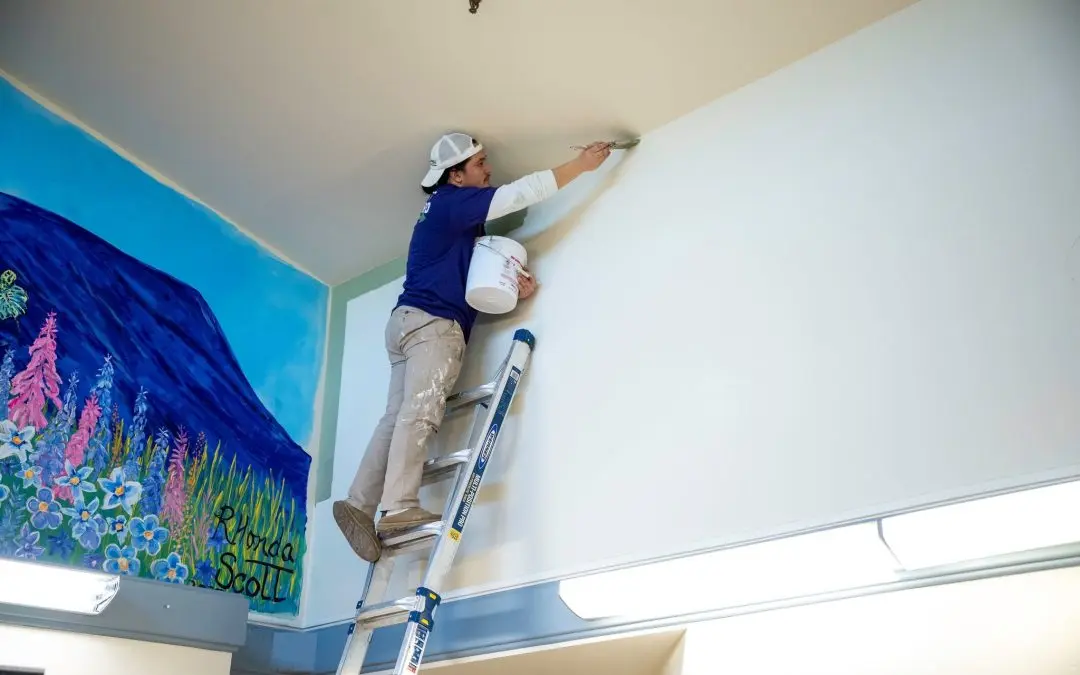
There isn’t one standard daily rate for house painters in Anchorage. The total depends on the crew size, the work included, the condition of the surfaces, and whether materials and preparation are part of the quote.
A day rate can help you understand labor, but it doesn’t always tell you what the full project will cost. Before comparing estimates, ask what work the price covers and how the painter expects to handle prep, materials, and cleanup.
What does a painter’s daily rate usually cover?
A daily rate is generally a way to charge for labor over a set workday. It may be based on one painter or a crew, so ask how many people are included and how long the quoted day is. A crew can complete more work in a day than one painter, but the number of workers alone doesn’t tell you how much of the job will be finished.
Some painting contractors quote the whole project instead. A project estimate can be easier to budget around because it describes the agreed scope, rather than leaving you to estimate how many workdays the job will take. The estimate should explain what is included, such as surface preparation, primer, paint, trim, and cleanup. It should also say what is excluded or could change the scope, such as hidden damage found after loose paint or wallpaper is removed.
Ask whether the painter is quoting labor only or including paint and other supplies. Confirm who is responsible for moving or covering furniture, protecting floors, and taking down and rehanging fixtures. If you’re comparing a daily rate with a project price, make sure you’re comparing the same work, materials, and crew size.
What affects the cost of a house painting project?
The size of the area matters, but square footage isn’t the only factor. Two rooms with similar floor space can take different amounts of work if one has high ceilings, many windows, detailed trim, or damaged walls. A careful estimate accounts for the surfaces that need painting, their condition, and the finish you want.
- Preparation: Washing, scraping loose paint, sanding, patching drywall, caulking gaps, and priming can take a meaningful share of the work. Skipping needed prep can affect how well the finish holds.
- Repairs: Small nail holes differ from larger drywall damage or broad areas of failing paint. Ask how repairs are described in the scope and how unexpected damage will be handled.
- Paint and finish: The product and sheen should suit the surface and the room. A painter should identify the planned product or explain how it will be chosen, rather than leaving you to guess what the estimate includes.
- Access and detail: Stairwells, high walls, tight work areas, intricate trim, and furniture that must be moved can affect the time required.
- Coats and color changes: The number of coats needed can depend on the surface, the existing color, and the product directions. Ask whether the estimate specifies the planned coats.
When you request a price, share photos if an in-person visit isn’t possible, but don’t treat a photo as a substitute for a clear written scope. For a closer look at what to ask when comparing house painters Anchorage guide information, focus on the work and materials included, not just the headline rate.
How should you compare estimates?
Get the proposed work in writing. A useful estimate should identify the areas to be painted, the preparation included, the paint or product plan, and what the painter will do to protect the home and clean up. It should make clear whether the price is for a fixed scope or based on time spent.
- Describe the same project to each painter. List rooms, surfaces, trim, repairs, and any areas that should be left alone.
- Ask how the quote is structured. Find out whether it is a project price, a daily rate, or another arrangement, and how extra work is approved.
- Check the preparation details. Ask what will be washed, sanded, patched, caulked, or primed. “Prep included” is less useful if nobody explains what that means for your surfaces.
- Confirm the materials and coats. Ask what paint is planned, who supplies it, and how many coats are included. Product instructions can set limits on application conditions and recoat times.
- Review the schedule and access plan. Ask how the crew will work around your household, pets, parking, and rooms that need to stay usable.
- Get changes documented. If you add work or a repair changes the scope, agree on the change and its effect on the schedule and total before work proceeds.
At Campbell Painting LLC, we’ve worked on residential and commercial painting projects in Anchorage since 2006. We don’t subcontract, so the same vetted, professional crew stays on the project from start to finish. That continuity can make it easier to know who is responsible for the agreed scope and day-to-day communication.
What Anchorage conditions can affect the schedule?
For interior painting, Anchorage weather can affect how a home is heated and ventilated, and whether windows can be opened for airflow. Follow the paint manufacturer’s directions for temperature, humidity, ventilation, and drying or recoat times. A surface that feels dry to the touch may still need more time before another coat or normal use.
Exterior painting has additional weather limits. Air temperature, surface temperature, moisture, rain, and the time available for paint to dry all matter. The acceptable conditions vary by product, so there isn’t one temperature range that applies to every paint. Ask your painter what product guidance they’ll follow and how the schedule may change if conditions aren’t suitable. A rushed coat on a damp or cold surface can create problems even if the day rate seems attractive.
Homes in different parts of Anchorage, from Midtown and Spenard to Sand Lake, Turnagain, Huffman-O’Malley, Girdwood, and the Hillside, can have different site access and exposure. Those details don’t establish a daily rate by themselves, but they can affect planning, setup, and when exterior work can be done. Your painter should look at the actual property and explain any schedule assumptions.
If the home was built before 1978, ask whether painted surfaces may contain lead before disturbing old paint. The U.S. Environmental Protection Agency’s Renovation, Repair and Painting program has requirements for covered renovation work in pre-1978 homes, including use of an EPA-certified firm when the rule applies. Don’t dry-sand or scrape suspected lead paint yourself. Ask the contractor how the issue will be assessed and what safe work practices apply.
What should you avoid when hiring a painter?
Don’t choose based on a daily rate alone. A low-looking rate may exclude materials or preparation, while a higher project price may cover a more complete scope. Without matching the details, the numbers don’t tell you which estimate represents better value.
Be cautious of vague descriptions such as “paint the house” that don’t say which walls, ceilings, trim, or exterior surfaces are included. Ask what happens if the crew finds peeling paint, soft drywall, or another condition that wasn’t visible at the estimate. A clear process for approving added work helps prevent surprises.
Don’t assume that a set number of days guarantees a particular finish. The amount of work completed can change with repairs, drying time, access, and weather. A dependable plan leaves room for the work to be done according to the product directions instead of promising speed without explaining the conditions.
“Before work starts, make sure you and your painter agree on the surfaces, preparation, and finish. A clear scope gives everyone a practical way to judge the result.”
Campbell Painting LLC
When is it worth hiring a professional?
Professional help is worth considering when the project includes extensive peeling, drywall repairs, high ceilings, detailed trim, multiple rooms, or exterior work with a tight weather window. It can also be a good choice if you’re unsure how to prepare a surface or how to work safely around older paint. A painter can assess the surfaces and explain which steps are needed before applying a finish coat.
For a smaller, straightforward room, you may be able to handle the work yourself if you have the time, tools, and patience for careful prep. Either way, make your decision using the full scope, not a day rate in isolation. Ask for a written estimate, understand how added work is handled, and leave enough schedule time for proper preparation and drying.
Prefer to listen? house painters Anchorage podcast episode.
Directions and reviews on Google Maps: house painters Anchorage. Or watch house painters Anchorage on YouTube.
Areas we serve
See every area Campbell Painting LLC serves
Campbell Painting LLC
1539 Harriet Ct, Anchorage, AK 99515
Phone: +1866-544-0241
Website: paintingalaska.com
Google Maps: house painters Anchorage
Hours: Mon 8:30-19:00; Tue 8:30-19:00; Wed 8:30-19:00; Thu 8:30-19:00; Fri 8:30-19:00; Sat 9:00-17:00; Sun closed

Recent Comments