
Community Spotlight: Ben of Campbell Painting Interviews with Taylor and Natalie at Alaska Resources Education
This community spotlight is brought to you by Anchorage painting experts – Campbell Painting

Phone:
(907) 276-KITS (5487)
Address:
601 E. 57th Place, Suite 101 | Anchorage, Alaska 99518
Email:
info@akresource.org
What are people saying about Alaska Resource Education?
Alaska Resource Education has been an invaluable resource over the past few years. Their lessons have increased my student’s understanding of Alaska’s natural resources including the ethical decision-making that takes place when extracting and utilizing resources. ARE teaches hands-on lessons involving solar panels and wind turbines. They collaborated with my students to come up with activities to simulate carbon sequestration. We find their lessons to be unbiased and focused on the pros and cons of each method, as well as the long-term impacts of utilizing Alaska’s natural resources. Our community needs collaborators like ARE in order to showcase our many valuable career options and to ensure our students become scientifically literate decision-makers that improve their communities.
ARE’s class changed my life and showed me that life is so much more than the straightforward path we are taught in school every day. My experience with ARE has shown me that life is full of possibilities and that it is okay and completely expected to not know what the rest of your life looks like.
Our partnership with Alaska Resource Education has led to incredible STEM-based learning opportunities that ultimately, teach our students about the many careers in our State’s environmental resources. The passion and callbir of the instruction provided by the staff of ARE, all of which have vast industry, teaching, and Alaska experience, helps them connect with our students in a way that is not easily replicated. They are patient, operate through a cultural lens, and help advocate on behalf of our program with other potential partnerships, which can lead to several post-secondary training programs and careers. Our program would not be as strong without our relationship with ARE.
I thought it was going to be a lecture. I thought I was going to have to bring fidgets all the time because I have really bad ADHD. But [ARE] kept us busy with activities and stuff. So it was really fun to be able to stay hands-on because that’s how it helps me learn.
Transcript
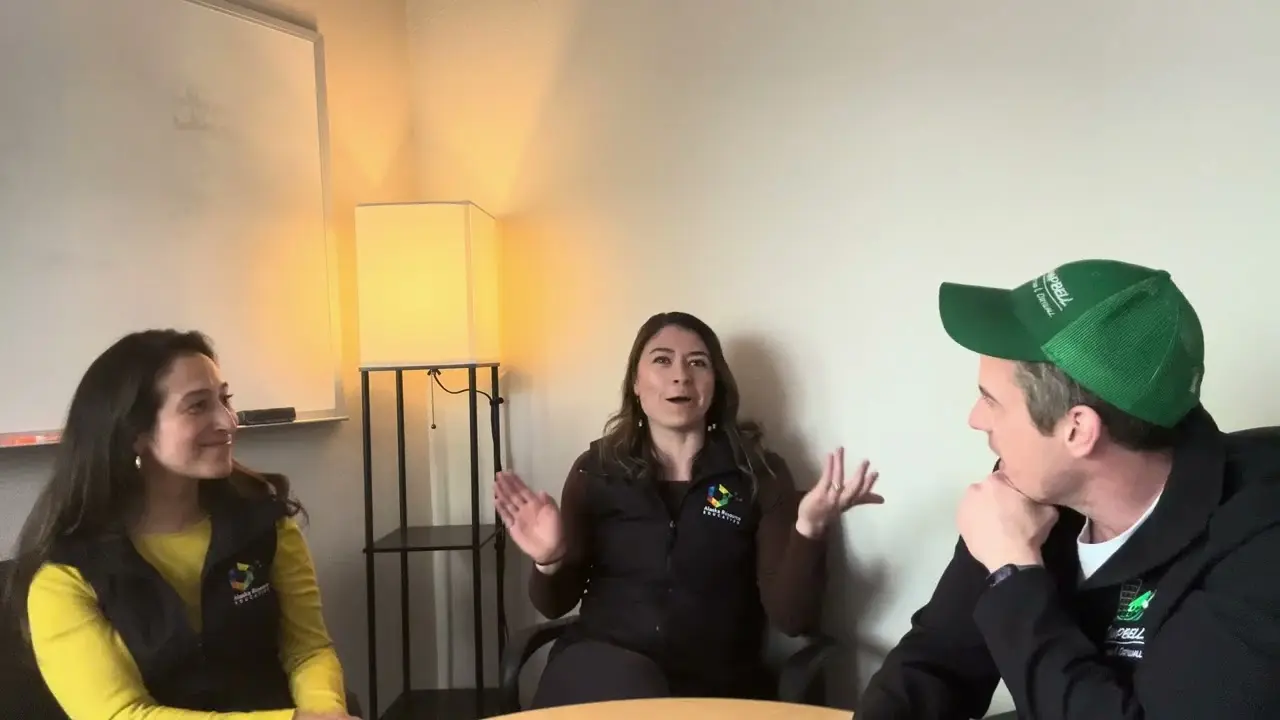
[Ben Campbell] (0:01): So, hello and welcome to today’s Community Spotlight where I introduce local companies I know and trust and introduce them to you. I am your host, Ben Campbell, and today I am with Taylor and Natalie at Alaska Resource Education. So, how did you guys get into this business of Alaska Resource Education?
[Taylor] (0:21): Yeah, so right now I’m the Operations Manager at ARE. And my path to get here is pretty long. It would take a long time to explain it all. But kind of the short side is my background is actually in science. So, my undergrad is in biology and ecology and I thought for a while that I wanted to be a scientist. Then I realized kind of working by yourself in a lab or in the field is not really for me and I want to work with people. So, at the same time, like throughout college, I was doing a lot of like basically jobs with kids, summer camp, after school stuff, that sort of thing. And I really realized how much of a passion I had for teaching students. And so, I kind of just ended up combining those two things. I didn’t really want to be a classroom teacher either. So, I kind of fell into this nonprofit education world almost by happenstance, honestly. I’m from Connecticut originally, so I went to Yukon, go Huskies. And then I thought I was a big sports person, so don’t ask me too many questions about when I was there. That’s the regret I have. But anyway, different story. So, I ended up in Alaska in 2015. This is actually my 10th year anniversary in Alaska, which is really cool.
[Natalie] (1:25): You’re Alaska.
[Taylor] (1:26): Yeah, this month actually. So, yeah. And I started out just part-time at a couple different other nonprofits here in town. And then eventually made my way to ARE in 2020 as a STEM educator. So, I started on the education team. And about a year ago, a year and a half ago, when I had my son, I moved over to the operations side just to be able to stay a little bit more local in Anchorage, because our education team does travel all around the state, which is really cool.
[Ben Campbell] (1:55): Awesome. How about you, Natalie?
[Natalie] (1:58): I just started with ARE in October. It’s been a wonderful transition. I mean, I try to get away from the nonprofit world, but it’s all I really care about. All I care about is youth, kids, opportunities. I used to be a teacher, so kind of all these jobs really flow really well with what I care about. And so, I got introduced with ARE last year when I was working with another company, and we did a lot with the ASD academies.
And I met Becky, who’s one of their rock stars for ARE, and she kind of introduced me a little bit what they do. And I got very lucky. I started part-time with them, and then I’m now one of them. And it’s just been a wonderful opportunity. I love that I do events and marketing, which I do with my other nonprofit as well, but being in the classroom, seeing what the difference makes, and also these programs of teaching kids about natural resources is so important. And I wish we had those opportunities 20 years ago, but I’m happy to be with a team that’s, excuse my language, badass. Their passion is kids, and having them stay in Alaska. Because in my last job, we did report about kids from the ages of 16 to 24 choosing not to live here, so we need to engage with youth. I think it’s really important that companies like ARE and everyone else engage with youth, show them the opportunities, because we’ve all wanted to move. We have moved out of state, and you’re not going to get the same opportunities here. And connections are everything, and that’s why working for ARE and just being a part of Alaska, you’re a family, no matter what. And you’re connected.
[Ben Campbell] (3:42): Nice.
[Natalie] (3:43): One of us now.
[Ben Campbell] (3:44): There you go.
[Taylor] (3:46): She’s very sought after in this town.
[Natalie] (3:51): Man, I have not changed since middle school.
[Ben Campbell] (3:55): Yeah.
[Natalie] (3:54): My grandpa, right? And he hasn’t either.
[Ben Campbell] (4:00): My weight fluctuates a bit. Okay, so what’s one thing everyone should know about this organization?
[Taylor] (4:11): Yeah, so the truth of it is we can’t live our modern-day life without natural resources.
[Ben Campbell] (4:18): Amen.
[Taylor] (4:18): We can’t turn our lights on, charge our phones, get in our car, anything, right? And we need to get that energy or those resources from somewhere. And Alaska has amazing resources here, and we have a really robust natural resource industries here. And a lot of people don’t know that, and they don’t know the importance of that, and they don’t understand how it all works, and the amazing job opportunities that are in these industries. And so that’s the story that ARE tells to students and to teachers, so we actually do teach teachers as well. But that’s the story that we’re telling that we don’t think anyone else is really telling.
[Ben Campbell] (4:57): Right.
[Taylor] (4:58): And it’s so important because students need to understand where these things come from, and how we get them, and how we use them, what happens when we’re done with them. So, we tell the full story of our resources, and we talk about the pros and cons of everything, right? So, we teach about energy, and we teach about oil and gas, and renewable energy, and all the different up-and-coming technologies that are happening within all of that. And then we talk about minerals, and where our minerals come from, and what those industries look like here in Alaska versus other places in the world. And all of those conversations are so critical, and they’re often contentious, and they’re often politicized, and we are not a political organization, so we just teach facts. We just tell them about the industries here in Alaska, and hope to empower them to become informed stewards of our resources. So, whether that means they get a job later on in the industries, that’s an amazing bonus, and we tell them about all the really awesome job opportunities. But even if they’re not interested, and that’s not their cup of tea, totally fine. We just want them to understand about all this stuff so they can go out into the world, hopefully stay in Alaska, and be able to kind of spread that message about where things come from.
[Ben Campbell] (6:10): Yeah.
[Taylor] (6:10): Yeah.
[Ben Campbell] (6:10): Oh, my gosh. I wish this was around 20 years ago.
[Taylor] (6:13): Same. Same.
[Ben Campbell] (6:16): I so wish.
[Taylor] (6:17): I learned all this when I got this job five years ago, right? I mean, it’s not common knowledge.
[Ben Campbell] (6:21): No, it is not.
[Taylor] (6:21): It’s really not.
[Ben Campbell] (6:22): And it’s so crucial, not only in how the economic standpoint you could have for the state, but just the stability for the state and the country, essentially, as well.
[Taylor] (6:30): Yes. Absolutely.
[Ben Campbell] (6:31): That is just, this is, you guys, I’m a fan for life. Whatever I can do to help.
[Taylor] (6:38): Thank you.
[Ben Campbell] (6:38): You know, we’re doing this for future purposes. I’m here.
[Taylor] (6:41): Yeah. Absolutely. Thank you. We appreciate that.
[Natalie] (6:44): Don’t worry. I’ll bug you.
[Taylor] (6:47): She’s our girl.
[Ben Campbell] (6:49): Okay. So, what is unique about this company?
[Taylor] (6:53): Yeah. Well, we kind of alluded to it before. We travel statewide doing the work that we do. So, we have a team of four educators who do this work. We’re based in Anchorage, and we have one educator in Fairbanks. But we travel literally to all corners of Alaska. So, this year alone, we’ve been to the Slope. We’ve been to Dutch Harbor. We’ve been to Southeast. I mean, like, name a community. We’ve probably been close to it, at least. And so, we really, with our small team of seven total, we’re really trying to make that impact statewide as best as we can.
[Ben Campbell] (7:24): Awesome.
[Taylor] (7:25): And then, the other thing that is as unique, I think people don’t know, is that we do this for free. So, we don’t charge teachers to come to their classrooms. And that’s always one of the first questions we get. It’s like, why aren’t you in the class? Have you guys come out?
And it’s like, we don’t charge you anything, right? We are, you know, we get our funding from a variety of sources, some grant funding, some corporate donations. We fundraise as well throughout the year. And we do all that because we don’t want to make this inaccessible to students. And so, yeah, it’s free of charge to go into people’s classrooms.
[Ben Campbell] (7:55): Yeah. Again, so awesome.
[Taylor] (7:58): Yeah.
[Ben Campbell] (7:58): So awesome. That is like, I’m trying to think of ways I can fundraise for you guys. Yeah, I’ll figure it out.
Taylor] (8:05): We can talk offline.
[Ben Campbell] (8:05): We’ll talk offline.
[Natalie] (8:06): One thing I want to point out, my sister used to live in Nome, and so I love the fact that they travel to Kotzebue, they go to Barrow, Nome. And that’s so important for Alaska Native American Indian youth to have these resources and opportunities. And that is one thing that I do love that you guys do. You’re not only serving Anchorage kids, you’re serving all of Alaska.
[Taylor] (8:28): Yeah, and especially because they’re not as connected as, you know, students are here in urban Alaska where they may have a family member who, like, is an engineer for Conoco or something like that, so they may have some kind of understanding. So, they may have less of a connection than students here in Anchorage and Fairbanks. And so, it’s even more important that we tell them about these opportunities because, actually, a lot of the projects that we’re talking about, that we’re teaching them about, happen close to their communities. So, whether we’re talking about, like, Red Dog Mine up in northwest Alaska, I mean, that directly impacts those communities out there. Or, obviously, all of our oil and gas development up on the slope, like, that impacts those communities. And so, it’s important for them to understand what’s happening in their backyard.
[Ben Campbell] (9:07): Yeah. Absolutely. Real quick, I had a renter who worked at Red Dog Mine. And he goes, and, like, renters, it’s always hard to find good people. And he gave me his letter of employment. And he made, like, $150,000 working two weeks on, three weeks off. I’m like, you are moving in, you know? You notice it was a really, really good career.
[Taylor] (9:30): It is. It’s so good. And a lot of rural students, you know, they might get concerned about not being able to live their, like, subsistence lifestyle that they’re used to. And the great thing about those schedules where they’re two on, two off, is that they can still do that. They can make that money, and then they can go back and live in their rural, their own communities if they want to. They can support their families. They can still live the lifestyle they want to live. And so, it is supportive of that. That’s six months of the year that you have off. We always put that in perspective for students. Like, I only get, like, four weeks off. So that’s pretty cool.
[Natalie] (10:01): Go live. One thing, too, one of our programs, Power, I got introduced to that in the beginning, actually, with you, before I even was at ARE. And the one thing that’s so amazing in Power, it’s, you know, it’s these women that come in and talk about what types of jobs there are and then natural resources. And I think it’s amazing. A lot of them said when they were younger, they were like, no, against mining and all that. They didn’t have the right education, and now they’re exposed to all this stuff and opportunities. And now, like Taylor said, we’re nonpartisan, and it’s really just showing you the facts and what natural resources do for, you know, our state of Alaska.
[Taylor] (10:41): A lot of people that I talk to in the industry, Becky included, who’s our program director, have told us time and time again that, like, you know, they come from this environmental background, and what they ended up realizing here in Alaska is that they could have the biggest impact environmentally by working directly for the industries where they can be the permanent or be the environmental scientist, where they can make sure that the work is being done right because we are heavily regulated here in Alaska, as we should be, as we all want to be so that we know we’re doing right by the environment. And we’ve heard that story so many times from so many people in the industry that, like, wow, I feel like I have the biggest impact by working for the Conocos or working for the, you know, adjacent organizations or companies in Alaska, making sure that it’s being done right. So, yeah, it’s really cool.
[Ben Campbell] (11:24): So cool.
[Taylor] (11:25): Yeah.
[Ben Campbell] (11:25): So cool. Okay. It’s my favorite one. What’s your favorite movie?
[Taylor] (11:31): You go first.
[Natalie] (11:31): You go first.
[Taylor] (11:32): Okay.
[Natalie] (11:32): I have like 10.
[Taylor] (11:33): All right. Well, this is really cliche, and in Alaska we get really mad at me for saying this, but my favorite movie is Into the Wild, and the reason why I realized the incorrectness of some of the stuff that Candice did, but I watched it when I was a high school senior. I think it was around the time it came out. And honestly, that was my first, like, introduction to Alaska even being on the map of the United States, to be completely honest. I’m from Connecticut, so across the way. And it really inspired me to come here and not necessarily do the things he did. I never went on the bus. The bus is gone now, but it got me up here, to be honest. Like, it kind of inspired me, and I would watch that movie once I made the decision to come up here for the first time. I watched it several times, and it’s just a really, it’s an awesome story. There’s lots of lessons to be learned from it. But yeah, it’s kind of that, it was that first, like, Alaska, like, thought for me. So, it has a really nice place in my heart.
[Ben Campbell] (12:33): When you said cliche, I thought you were going to say Balto.
[Taylor] (12:36): No. That’s a good answer. I do love Balto. I do love Balto, but.
[Natalie] (12:48): We’re a little nervous.
[Taylor] (12:50): I didn’t let you down.
[Natalie] (12:52): Okay. I have like 10 of them. It’s hard because I love the movie Beaches, but I got to say Coming to America. That’s my favorite. I don’t even watch the second one. That was awful. But the first one, I mean, I can recite the whole movie and I love, I love old raunchy comedy, like Eddie Murphy. Eddie Murphy is so good. Coming to America, still to this day.
[Taylor] (13:15): Nice.
[Ben Campbell] (13:16): Okay. So, what’s, what’s the best way to reach, reach you guys or to donate or to get help, help you guys out? What’s the best way?
[Taylor] (13:25): Yeah. So, you can go to our website, which is AK resource.org. And there’s lots of ways to connect with us there. So, if you’re a teacher and you want us to come to your classroom, there’s a button on there where you can request a classroom visit. That goes directly to me. So, you’ll be talking to me about that.
And then we also have a whole page for if you want to donate and, or an email to reach out to us. If you just want to chat with us about ways to partner, whether you’re an educational organization or you’re someone who is interested in, in, you know financially supporting us in some way. So, the best way is go to our website, but we also are on social media as well. So, we’ve got a Facebook, we’ve got an Instagram.
[Natalie] (14:05): LinkedIn.
[Taylor] (14:06): LinkedIn. So, find us on any of those platforms.
[Ben Campbell] (14:08): Perfect.
[Taylor] (14:09): Yeah.
[Ben Campbell] (14:09): Perfect. Okay. Spread the word. We need this to get out all of Alaska. All right. So, thank you so much.
[Taylor] (14:18): Thank you.
[Natalie] (14:18): Thank you.
At Campbell Painting, we’re more than just painters — we’re your partner in bringing ideas to life. Our Anchorage team combines skill and care to deliver a finish you’ll love for years to come.